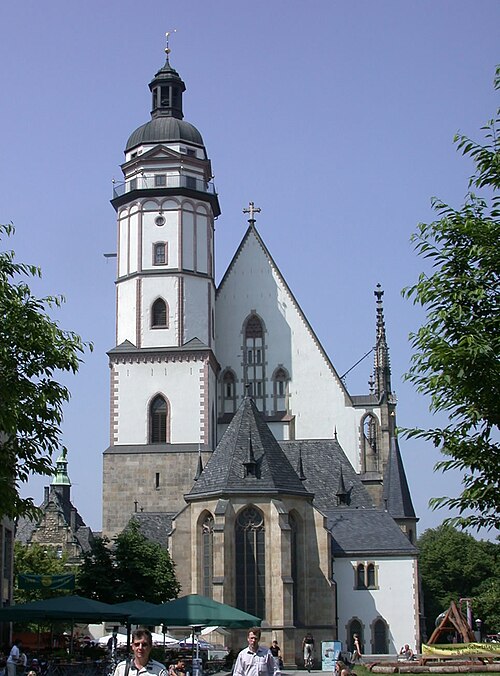
 1
St. Thomas Church (Thomaskirche)
2 hours
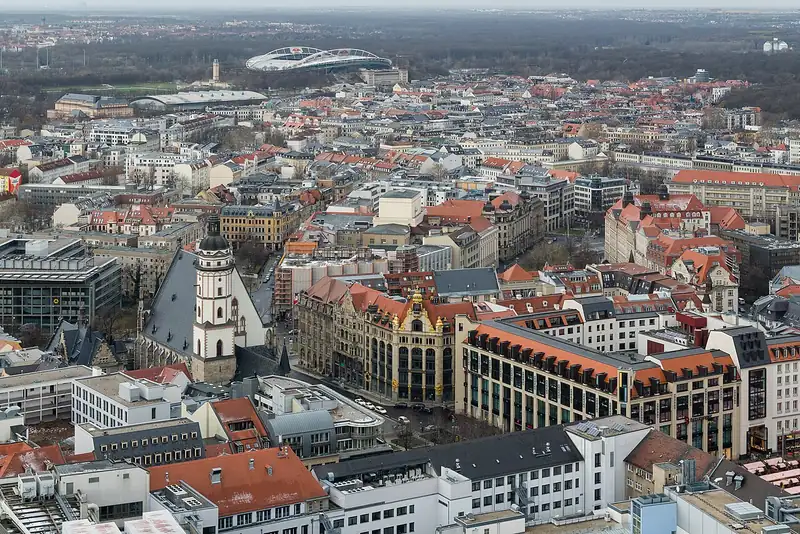
Leipzig is Saxony's biggest city, with a long trading history, a famous university and a strong music tradition.
Leipzig is Saxony's biggest city, with a long trading history, a famous university and a strong music tradition. Bach is buried here and the 1989 peaceful protests that helped end East Germany began at the Nikolaikirche. Walk the old town and the shopping passages, then see the former factory districts. Trams are the easiest way around.
Updated 20 Nov 2026. Words from our research of Wikivoyage and Wikipedia, written by Trip720; figures from our checked data, each with its source.
What it costs
Sources: livingcost.org, en.wikivoyage.org, taxirechner.de; in GBP at today's rate.
Not to miss
In Leipzig first, day trips last.
12 hours
2 hours
2 hours
 4
2 hours
 5
2 hours
 6
2 hours
 7
Half a day
 8
Half a day
Half a day
Open December
From our research of travel guides; ticket prices from Tiqets when we found them. Photos: Wikimedia Commons, free licences.
How to see it
Grouped so you never cross the town twice. Your own trip moves these around your dates, opening days and budget.
Where to sleep
Where you sleep in Leipzig decides how much you walk and how you spend your evenings. Your trip prices the stays for your dates.
The market square, churches and shopping passages. The easiest base for sights.
A former industrial district with art spaces in old factories. Can feel quiet at night.
A large area of grand old apartment buildings. Calm and residential.
What to eat

A shortcrust pastry with almonds and cherry jam. The name means Leipzig lark.

A mix of young vegetables, a classic city dish.

The city has one of Europe's oldest coffee houses still in use.

Small fried cakes of quark and potato, eaten warm.
Dish photos: Wikimedia Commons, free licences.
When to go
Best monthsAverage daytime high
Pleasant days and the least rain.
31 mm of rain on average.
78 mm of rain on average.
Source: NASA POWER climatology.
Good to know
Official source: gov.uk, checked 2026-10-01. Your plan checks your own passport when you build it.
Validate paper tickets after boarding the first tram or bus.
If the driving lane is beside the track, wait behind a stopped tram until passengers have boarded.
Trains to Leipzig/Halle airport take around 15 to 18 minutes.
The Leipzig Card gives unlimited city travel and discounts for one to three days.
The Nikolaikirche holds peace prayers on Mondays, where the 1989 protests began.
Several museums are free on set days. The Bach Museum is free on the first Tuesday of the month.
Questions
Food and getting around come to about £35 a person a day eating street food, £55 with a balanced mix and £67 eating mostly in restaurants, before your stay and activities.
The most pleasant months are April to September. April is the driest month (31 mm of rain) and July the wettest (78 mm); daytime highs run from 3 to 26 °C over the year.
No visa needed for a holiday. Checked on gov.uk on 2026-10-01; rules change, so check again before you book.
St. Thomas Church (Thomaskirche), Nikolaikirche, Völkerschlachtdenkmal, Bach-Museum, Museum in der Runden Ecke (Stasi museum).
Tell us your total. We build the whole trip to fit it, every cost counted.
Header photo: Tuxyso, CC BY-SA 3.0, Wikimedia Commons. Photo credits