 1
Arusha National Park
A full day
40 minutes from town: Momella lakes with flamingos, Ngurdoto Crater, giraffe and colobus monkeys; canoe and walking safaris
Arusha is a busy market city on the slopes of Mount Meru, and the main base for safaris in northern Tanzania.
Arusha is a busy market city on the slopes of Mount Meru, and the main base for safaris in northern Tanzania. The Serengeti, Ngorongoro, Tarangire and Kilimanjaro are all within reach. Its height keeps days mild and nights cool. Use your time here to rest, sort out your safari and eat well, and take a taxi after dark rather than walk.
Updated 20 Nov 2026. Words from our research of Wikivoyage and Wikipedia, written by Trip720; figures from our checked data, each with its source.
What it costs
Estimated from price levels across Tanzania (World Bank), as our planner does until we check Arusha itself; in GBP at today's rate.
Not to miss
In Arusha first, day trips last.
1A full day
40 minutes from town: Momella lakes with flamingos, Ngurdoto Crater, giraffe and colobus monkeys; canoe and walking safaris
2 hours
Large African art gallery, Tanzanite showroom and craft market on the airport road; free to browse
 3
2 hours
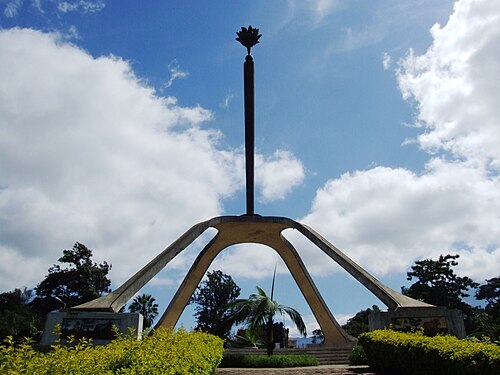
Small museum on Tanzania's independence and Nyerere's socialism, beside the Uhuru monument in the city centre
A full day
180 km west, usually a long day trip or overnight at Karatu; the crater floor has the Big Five including black rhino
A full day
Arusha is the start of the Northern Circuit; 3-5 day trips combine Serengeti with Ngorongoro. Migration timing varies by month
A full day
About 2 hours from Arusha; the best one-day safari from town, elephants and baobabs, especially June-October
A full day
Rift Valley lake with flamingos, hippo pools and the famous tree-climbing lions; often combined with Ngorongoro
A full day
Tanzania's second-highest peak, 3-4 days with an armed ranger; good acclimatisation before Kilimanjaro
A full day
5-8 day guided climbs start from Moshi, 90 minutes from Arusha; longer routes give better summit odds
Taste of the mountain without the summit: forest walk from Marangu Gate with monkeys and birds, guide required
From our research of travel guides; ticket prices from Tiqets when we found them. Photos: Wikimedia Commons, free licences.
Where to sleep
Where you sleep in Arusha decides how much you walk and how you spend your evenings. Your trip prices the stays for your dates.
Many hotels near the clock tower, shops and safari offices. Handy, but busy, and touts work the streets.
Easy for early buses. Rooms facing the road can be very noisy.
Quieter lodges and gardens outside town. Restful after a safari; you need a taxi for everything.
What to eat

Grilled meat, usually goat or beef, shared with friends and a cold drink.

Thick maize porridge eaten with stews, greens or meat, often by hand.

Chips cooked into an omelette. Cheap, filling street food.

Rice cooked with a mix of spices, often with meat.
Dish photos: Wikimedia Commons, free licences.
When to go
Best monthsAverage daytime high
Pleasant days and the least rain.
9 mm of rain on average.
147 mm of rain on average.
Source: NASA POWER climatology.
Good to know
Official source: visa.immigration.go.tz, checked 2026-10-26. Your plan checks your own passport when you build it.
Take a taxi at night, even in a group. Bag snatching is reported on Sokoine Road and Old Moshi Road.
Touts approach almost everyone. Keep walking, avoid eye contact and say hapana asante, which means no thank you.
Taxis have no meters, so settle the price before you get in. Avoid motorbike taxis, above all at night.
Tap water carries high natural fluoride, even when treated. Drink bottled or filtered water.
Paying more does not always mean better vehicles, food or camps. Read up on the parks and ask what is included.
Dala dala minibuses are crowded and pickpockets work them. Keep your bag on your lap.
Questions
Food and getting around come to about £10 a person a day eating street food, £16 with a balanced mix and £19 eating mostly in restaurants, before your stay and activities. These are estimates from price levels across Tanzania; Arusha itself is not checked yet.
The most pleasant months are January, February and May to October. July is the driest month (9 mm of rain) and April the wettest (147 mm); daytime highs run from 24 to 29 °C over the year.
An e-visa before you fly (Tanzania Ordinary Visa), US$50. Checked on visa.immigration.go.tz on 2026-10-26; rules change, so check again before you book.
Arusha National Park, Cultural Heritage Centre, Arusha Declaration Museum, Ngorongoro Crater safari, Serengeti safari (multi-day).
Tell us your total. We build the whole trip to fit it, every cost counted.
Header photo: Wikimedia Commons, free licence. Photo credits