 1
Swakopmund Jetty
2 hours
Best at sunset; restaurant at the end
Swakopmund is a seaside town where the Namib Desert meets a cold, foggy Atlantic, and its German-era buildings give it an unusual mix of Europe and Africa.
Swakopmund is a seaside town where the Namib Desert meets a cold, foggy Atlantic, and its German-era buildings give it an unusual mix of Europe and Africa. Bring a warm layer: the fog keeps it cool, but the sun still burns. Spend your days on the dunes, sandboarding, quad biking or flying over the desert. In the evening, eat fresh fish and watch the sun set from a beach bar.
Updated 20 Nov 2026. Words from our research of Wikivoyage and Wikipedia, written by Trip720; figures from our checked data, each with its source.
What it costs
Sources: travelwithhello.com, nampa.org, namibian.com.na; in AUD at today's rate.
Not to miss
In Swakopmund first, day trips last.
12 hours
Best at sunset; restaurant at the end
 2
2 hours
Climb the Damara tower for a view over the town and dunes
 3
2 hours
 4
2 hours
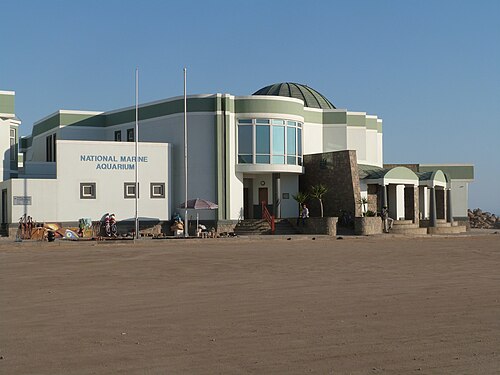 5
2 hours
Feeding at 15:00
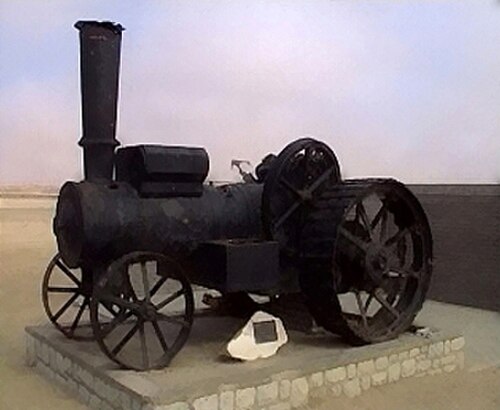 6
2 hours
Quick stop on the road out of town towards Windhoek
Half a day
2 hours
Half a day
Take a guided tour unless you have a 4x4 and desert driving experience
Morning catamaran from the Walvis Bay waterfront; oysters and sparkling wine on board
From our research of travel guides; ticket prices from Tiqets when we found them. Photos: Wikimedia Commons, free licences.
How to see it
Grouped so you never cross the town twice. Your own trip moves these around your dates, opening days and budget.
Where to sleep
Where you sleep in Swakopmund decides how much you walk and how you spend your evenings. Your trip prices the stays for your dates.
Walk to cafés, museums and the jetty among the colonial buildings. Use guarded parking for your car.
Guesthouses and apartments near the jetty and the sea. Breezy and scenic; foggy mornings are common.
A quiet residential area with guesthouses. Calm, but take a taxi after dark.
What to eat
Atlantic fish and seafood, the main draw in the town's restaurants.

Chocolate, cherry and cream cake, a German café favourite here.
Kudu or oryx on the menu at some restaurants.
Southern African barbecue of meat grilled over coals, a social meal.
Dish photos: Wikimedia Commons, free licences.
When to go
Best monthsAverage daytime high
Pleasant days and the least rain.
0 mm of rain on average.
21 mm of rain on average.
Source: NASA POWER climatology.
Good to know
Official source: namembassy.fi, checked 2026-10-26. Your plan checks your own passport when you build it.
Leave nothing visible in your car, and park where a guard watches it.
Quiet streets are risky after dark. Take a taxi, and be wary of strangers who approach you.
There is no public transport, and taxis are hard to find, especially on Saturday evenings. Arrange rides ahead.
The Atlantic is icy and currents are strong. Swim only in the protected area in town.
Sunburn is common even on grey days. Wear sunscreen and a hat on the dunes.
Restaurants expect a tip, and car guards expect a small one too.
Questions
Food and getting around come to about A$21 a person a day eating street food, A$36 with a balanced mix and A$48 eating mostly in restaurants, before your stay and activities.
The most pleasant months are all year. August is the driest month (0 mm of rain) and February the wettest (21 mm); daytime highs run from 19 to 23 °C over the year.
Namibia visa on arrival, NAD 1,600. Checked on namembassy.fi on 2026-10-26; rules change, so check again before you book.
Swakopmund Jetty, Woermannhaus, Swakopmund Museum, Kristall Galerie, National Marine Aquarium of Namibia.
Tell us your total. We build the whole trip to fit it, every cost counted.
Header photo: Wikimedia Commons, free licence. Photo credits