 1
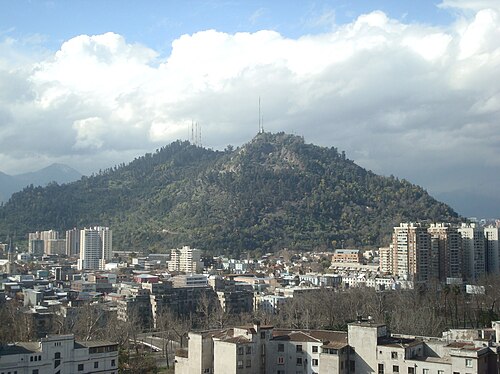
Cerro San Cristóbal (Parque Metropolitano)
Half a day
Take the funicular up from Bellavista; clearest views in the morning
Santiago is Chile's capital, a big modern city in a valley with the high Andes on its eastern edge.
Santiago is Chile's capital, a big modern city in a valley with the high Andes on its eastern edge. Most visitors split their time between the old centre around the Plaza de Armas and the greener, safer east. Smog is worst from May to September, so spring and autumn give clearer mountain views. In the evening, head to Bellavista or Lastarria for bars and dinner.
Updated 20 Nov 2026. Words from our research of Wikivoyage and Wikipedia, written by Trip720; figures from our checked data, each with its source.
What it costs
Sources: numbeo.com, livingcost.org; in AUD at today's rate.
Not to miss
In Santiago first, day trips last.
1Half a day
Take the funicular up from Bellavista; clearest views in the morning
 2
2 hours
 3
2 hours
 4
2 hours
 5
2 hours
Come for a seafood lunch
 6
2 hours
 7
2 hours
 8
2 hours
Half a day
About 90 minutes from Santiago; Valparaíso's hillside old town is UNESCO-listed
From our research of travel guides; ticket prices from Tiqets when we found them. Photos: Wikimedia Commons, free licences.
How to see it
Grouped so you never cross the town twice. Your own trip moves these around your dates, opening days and budget.
Where to sleep
Where you sleep in Santiago decides how much you walk and how you spend your evenings. Your trip prices the stays for your dates.
Leafy and central, with hostels, cafes and good metro links. One of the safest parts of the city.
Small boutique hotels, relaxed bars and cafes, just east of the old centre.
The bohemian quarter, packed with bars and clubs. Fun at night, noisy if you want sleep.
The business district in the east, with upscale hotels and high-end bars. Safe, but far from the old centre.
Colonial squares, markets and mid-range hotels downtown. Busy by day; keep valuables hidden.
What to eat

Chile's loaded hot dog, piled with avocado, tomato and sauerkraut.

A baked pie of minced beef, chicken, olives and egg under sweet ground corn.
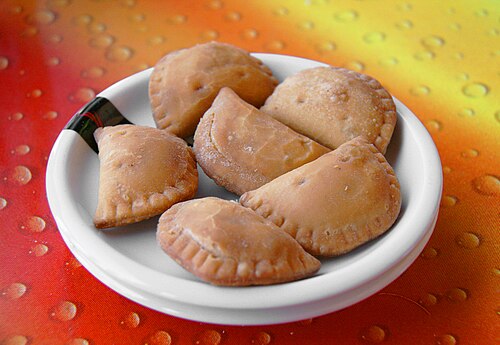
Baked pastry filled with beef and onion, the favourite Chilean filling.
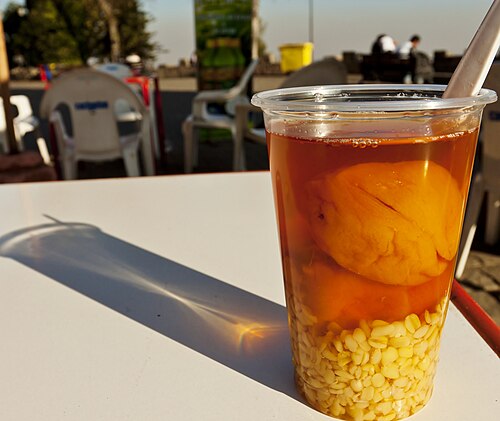
A cold summer drink of dried peaches and cooked wheat, sold from street stalls.
Dish photos: Wikimedia Commons, free licences.
When to go
Best months30° and overAverage daytime high
Pleasant days and the least rain.
7 mm of rain on average.
Up to 31° in the afternoon. June is the wettest month (63 mm).
Source: NASA POWER climatology.
Good to know
Official source: smartraveller.gov.au, checked 2026-10-01. Your plan checks your own passport when you build it.
You need a bip! card for the metro and buses. It lets you change between them within two hours.
Keep phones and cameras out of sight, and skip parks after dark. Pickpocketing is the main risk.
Ignore people offering to swap money in the street; use official exchange offices.
Official taxis are black with a yellow roof. Late at night, call a radio taxi instead.
Chile's police are generally trustworthy, and offering them a bribe is a serious mistake.
Days and nights differ a lot, even in summer. Bring a warm layer for after dark.
Questions
Food and getting around come to about A$47 a person a day eating street food, A$67 with a balanced mix and A$130 eating mostly in restaurants, before your stay and activities.
The most pleasant months are February to December. December is the driest month (7 mm of rain) and June the wettest (63 mm); daytime highs run from 16 to 31 °C over the year.
No visa needed for a holiday. Checked on smartraveller.gov.au on 2026-10-01; rules change, so check again before you book.
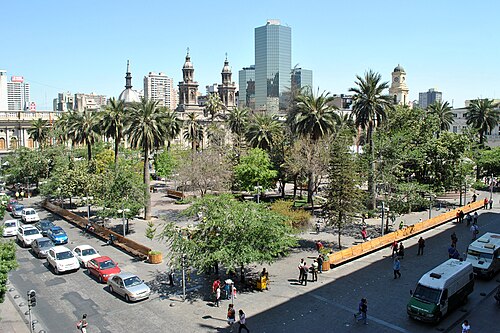
Cerro San Cristóbal (Parque Metropolitano), Plaza de Armas and the Metropolitan Cathedral, Palacio de La Moneda, Cerro Santa Lucía, Mercado Central.
Tell us your total. We build the whole trip to fit it, every cost counted.
Header photo: Wikimedia Commons, free licence. Photo credits