1
Santorini Wine Museum
2 hours
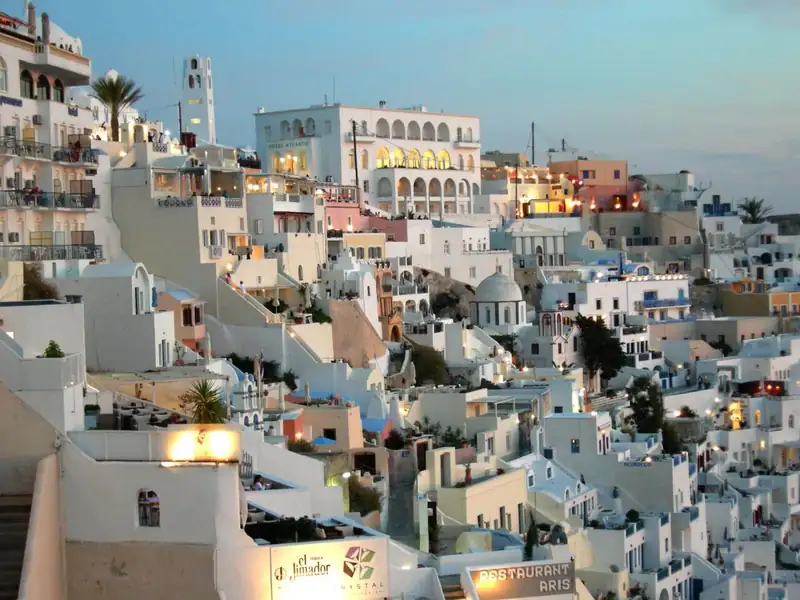
Santorini is a volcanic island whose white villages sit on the rim of a huge flooded caldera.
Santorini is a volcanic island whose white villages sit on the rim of a huge flooded caldera. Fira and Oia have the famous cliff views, while the east coast has dark pebble and sand beaches. Walk the cliff path from Fira to Oia in the morning, before the heat. In the evening, skip the sunset crowds in Oia and watch from a quieter village.
Updated 20 Nov 2026. Words from our research of Wikivoyage and Wikipedia, written by Trip720; figures from our checked data, each with its source.
What it costs
Estimated from price levels across Greece (World Bank), as our planner does until we check Firá itself; in GBP at today's rate.
Not to miss
In Firá first, day trips last.
2 hours
 2
Half a day
Arrive well before dusk; the castle ruins and windmills are the classic spots
 3
Half a day
Whitewashed capital on the 400 m caldera cliff; cable car or zigzag path down to the old port
 4
2 hours
Bronze Age town buried by the Theran eruption; fully covered so fine in summer heat
 5
2 hours
Short walk from the Akrotiri car park; combine with the archaeological site
 6
2 hours
Hilltop classical city above Kamari; best in the morning before the heat
 7
Half a day
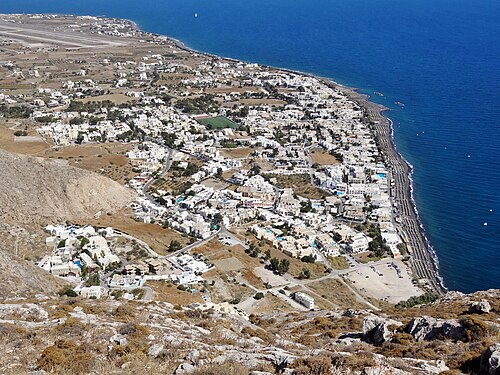
Organised beaches with sunbeds and tavernas; the dark sand gets very hot
 8
2 hours
Quieter than Oia; climb to the castle for island-wide views
 9
2 hours
In Fira; see the Akrotiri frescoes before or after the site itself

From our research of travel guides; ticket prices from Tiqets when we found them. Photos: Wikimedia Commons, free licences.
How to see it
Grouped so you never cross the town twice. Your own trip moves these around your dates, opening days and budget.
Where to sleep
Where you sleep in Santorini decides how much you walk and how you spend your evenings. Your trip prices the stays for your dates.
The capital, on the caldera rim, with the bus hub, museums and nightlife. Handy for everything; crowded in summer.
Cliff-top village of whitewashed houses, famous for sunsets. Beautiful, but packed with visitors at dusk.
Quieter cliff-top village close to Fira, with big caldera views. Expect lots of steps to many hotels.
East coast beach town with larger rooms and pools. Good for families and lower rates, but no caldera view.
Beach village in the south with fish tavernas and dive shops. Relaxed; a bus ride from Fira.
What to eat

Smooth yellow split pea purée with olive oil, lemon and onion. The island's signature dish.

Fritters of local cherry tomatoes, herbs and batter, fried in olive oil.
A sweet local aubergine with few seeds, now rare. Try it as a purée.

The island's white wine grape, grown in low baskets against the wind.
Dish photos: Wikimedia Commons, free licences.
When to go
Best monthsAverage daytime high
Pleasant days and the least rain.
2 mm of rain on average.
96 mm of rain on average.
Source: NASA POWER climatology.
Good to know
Official source: gov.uk, checked 2026-10-01. Your plan checks your own passport when you build it.
The UV index is very high all year. Use strong sunscreen and stay out of the midday sun.
Tap water is desalinated and safe but salty. Most visitors buy bottled water, and dehydration is common.
Buses link most villages with Fira, so cross-island trips mean a change there. Pay the driver in cash.
Some rental shops hand over faulty quads, then charge for damage. Inspect the vehicle and read the insurance terms.
Hotels are small and fill early. April to June and September to October are milder and calmer.
Some bars and restaurants overcharge. Avoid places without posted prices, and check your bill.
Questions
Food and getting around come to about £26 a person a day eating street food, £43 with a balanced mix and £51 eating mostly in restaurants, before your stay and activities. These are estimates from price levels across Greece; Santorini itself is not checked yet.
The most pleasant months are April to November. July is the driest month (2 mm of rain) and January the wettest (96 mm); daytime highs run from 13 to 26 °C over the year.
No visa needed for a holiday. Checked on gov.uk on 2026-10-01; rules change, so check again before you book.
Santorini Wine Museum, Oia sunset, Fira and the caldera edge, Akrotiri archaeological site, Red Beach.
Tell us your total. We build the whole trip to fit it, every cost counted.
Header photo: Manuco, CC BY-SA 3.0, Wikimedia Commons. Photo credits