 1
Lake Ashi (Ashinoko)
Half a day
Fuji views need a clear day
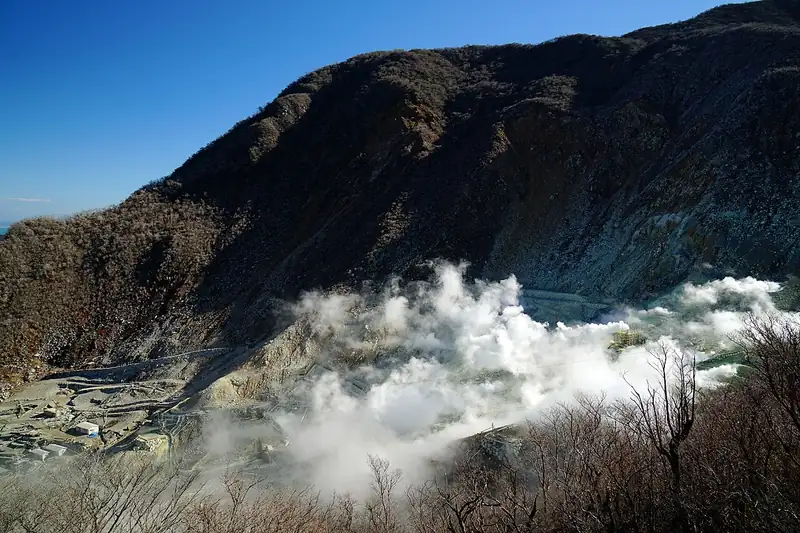
Hakone is a hot spring area in the mountains west of Tokyo, with views of Mount Fuji on clear days.
Hakone is a hot spring area in the mountains west of Tokyo, with views of Mount Fuji on clear days. Most visitors follow a loop by train, cable car, ropeway and lake boat, so a travel pass is worth buying. Stay one night in a ryokan with its own bath and dinner. Go early, because the main sights get crowded.
Updated 20 Nov 2026. Words from our research of Wikivoyage and Wikipedia, written by Trip720; figures from our checked data, each with its source.
What it costs
Sources: livingcost.org, gobytaxi.com, travelclassroom.net; in GBP at today's rate.
Not to miss
In Hakone first, day trips last.
1Half a day
Fuji views need a clear day
 2
2 hours
 3
2 hours
 4
Half a day
 5
2 hours
2 hours
Open 11:00 to 20:00 daily, free shuttle from Hakone-Yumoto bus station
 7
Half a day · open March to October
Half a day
2 hours
Many hotels open their baths to day visitors
From our research of travel guides; ticket prices from Tiqets when we found them. Photos: Wikimedia Commons, free licences.
How to see it
Grouped so you never cross the town twice. Your own trip moves these around your dates, opening days and budget.
Where to sleep
Where you sleep in Hakone decides how much you walk and how you spend your evenings. Your trip prices the stays for your dates.
The gateway station with a busy hot spring street. Easiest to reach, with cheaper stays; farther from the lake and Fuji views.
Up the mountain railway, where the cable car starts. Ryokan with private baths and a good middle point for the loop.
A small hot spring village on the railway, home to a historic Western-style hotel. Charming and central.
Moto-Hakone and Hakone-machi by the lake, near the shrine and the boats. Best for Fuji views; buses stop early.
A quieter area in the north with art museums and guesthouses. Peaceful, but you rely on buses.
What to eat
Eggs boiled black in the sulphur springs of Owakudani. Legend says each adds years to your life.

Buckwheat noodles made with local spring water, served hot or cold.

Tofu simmered in a sweet sauce with egg, a popular local lunch.

The many-course dinner served at a ryokan, built on seasonal food.
Dish photos: Wikimedia Commons, free licences.
When to go
Driest monthsAverage daytime high
Warm all year; these months have the least rain.
72 mm of rain on average.
232 mm of rain on average.
Source: NASA POWER climatology.
Good to know
A multi-day pass covers the trains, cable car, ropeway, boats and most buses, with discounts at some baths and museums.
The ropeway closes for strong wind and inspections, with buses running instead. Check on the morning you go.
Shower fully before entering the bath. Keep towels out of the water, and no swimsuits.
Many baths refuse guests with tattoos. Some accept small ones under a plaster, so ask first.
Ryokan serve dinner at a set time and some have a curfew. Avoid arriving the same day you land in Japan.
Buses from some outlying spots stop early in the evening. Plan your return before you set out.
Questions
Food and getting around come to about £32 a person a day eating street food, £39 with a balanced mix and £51 eating mostly in restaurants, before your stay and activities.
The driest months are December to February. January is the driest month (72 mm of rain) and July the wettest (232 mm); daytime highs run from 6 to 25 °C over the year.
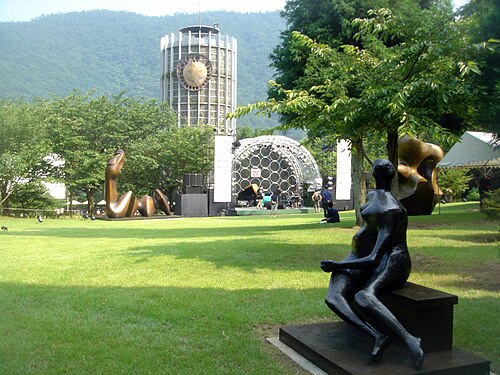
Lake Ashi (Ashinoko), Owakudani Great Boiling Valley, Hakone Shrine and its water torii, Hakone Open Air Museum, Pola Museum of Art.
Tell us your total. We build the whole trip to fit it, every cost counted.
Header photo: 663highland, CC BY 2.5, Wikimedia Commons. Photo credits