 1
Belgian Comic Strip Center
2 hours
In a Victor Horta Art Nouveau building; look for the comic murals around town too
Brussels is a small, easygoing capital where French and Dutch share every street sign.
Brussels is a small, easygoing capital where French and Dutch share every street sign. Start at the Grand-Place, one of Europe's grandest squares, then walk the old centre for comic strip murals, chocolate shops and Art Nouveau houses. Rain is common, so plan a museum or two. In the evening, order mussels and fries, then try a sour local beer in an old café.
Updated 20 Nov 2026. Words from our research of Wikivoyage and Wikipedia, written by Trip720; figures from our checked data, each with its source.
What it costs
Estimated from price levels across Belgium (World Bank), as our planner does until we check Brussels itself; in GBP at today's rate.
Not to miss
In Brussels first, day trips last.
12 hours
In a Victor Horta Art Nouveau building; look for the comic murals around town too
 2
2 hours
Same entrance as the Oldmasters Museum; a combined ticket covers both
 3
2 hours
Daily until early afternoon; biggest on weekends
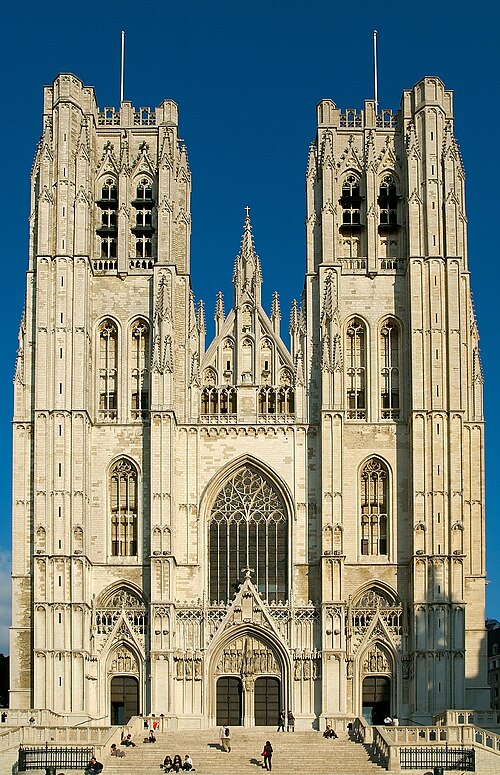 4
2 hours
 5
2 hours
Tiny statue, big crowds; often dressed in one of its hundreds of costumes
 6
2 hours
Metro to Heysel; the top sphere has a panorama over the city
 7
2 hours · open March to December
Next to the Atomium; combine the two
 8
2 hours
Come back after dark when the guildhouses are lit; the Town Hall belfry dominates the square
 9
2 hours
Climb to the terrace above the arch for the view; Autoworld and the Art & History Museum are in the park

Neuhaus, Pierre Marcolini and Wittamer side by side; antiques market at weekends
From our research of travel guides; ticket prices from Tiqets when we found them. Photos: Wikimedia Commons, free licences.
How to see it
Grouped so you never cross the town twice. Your own trip moves these around your dates, opening days and budget.
Where to sleep
Where you sleep in Brussels decides how much you walk and how you spend your evenings. Your trip prices the stays for your dates.
Around the Grand-Place and the shopping streets. Walk to everything; crowded, and watch for pickpockets.
Seafood places and bars around old squares, a short walk from the Grand-Place. Good for evenings out.
Business hotels near the EU buildings and Cinquantenaire Park. Good weekend deals; quiet at night.
Restaurants, independent shops and African cafés in Matongé. Local feel; a tram or bus ride to the centre.
Bohemian streets of Art Nouveau houses near Midi station. Full of character; the station area feels rough after dark.
What to eat

A pot of mussels steamed with onion and celery, with fries on the side.

Light, crisp rectangle with toppings. The round Liège waffle is sweeter and eaten plain.

Potato mashed with carrots or cabbage, usually with a sausage.

Sour, fizzy beer made by wild fermentation in the Brussels area. Try kriek for cherry.
Dish photos: Wikimedia Commons, free licences.
When to go
Best monthsAverage daytime high
Pleasant days and the least rain.
38 mm of rain on average.
79 mm of rain on average.
Source: NASA POWER climatology.
Good to know
Official source: gov.uk, checked 2026-10-01. Your plan checks your own passport when you build it.
Midi, Central and North stations are pickpocket hot spots. Keep bags closed, and avoid walking alone around Midi at night.
On Rue des Bouchers, touts pull in diners and menu prices can change. Ask prices before you order.
Stations and streets have French and Dutch names, and announcements often use only those. Know both names for your stop.
Metro, trams and buses accept contactless bank cards. From the airport, a combined ticket covers the train and city transport.
Rain can fall in any month. The metro and the many museums make good shelter.
Most restaurants include service in the bill, so a big tip is not expected. Round up if you liked it.
Questions
Food and getting around come to about £36 a person a day eating street food, £59 with a balanced mix and £71 eating mostly in restaurants, before your stay and activities. These are estimates from price levels across Belgium; Brussels itself is not checked yet.
The most pleasant months are April to October. April is the driest month (38 mm of rain) and August the wettest (79 mm); daytime highs run from 5 to 24 °C over the year.
No visa needed for a holiday. Checked on gov.uk on 2026-10-01; rules change, so check again before you book.
Belgian Comic Strip Center, Magritte Museum (Royal Museums of Fine Arts), Jeu de Balle Flea Market (Marolles), Cathedral of St. Michael and St. Gudula, Manneken Pis.
Tell us your total. We build the whole trip to fit it, every cost counted.
Header photo: Wikimedia Commons, free licence. Photo credits