 1
Basilique Notre-Dame de la Garde
2 hours
The Bonne Mère on the hilltop; bus 60 from the port or a 30-minute climb; 360-degree view of the city and islands
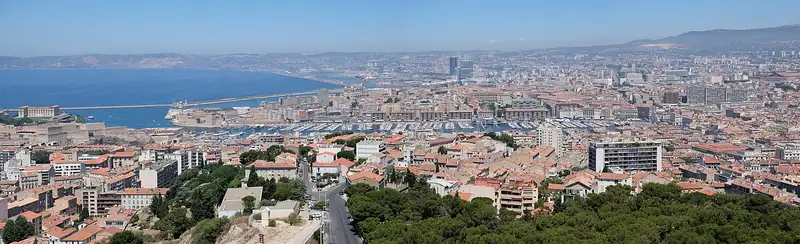
Marseille is one of France's oldest cities and its great Mediterranean port, rough at the edges and full of character.
Marseille is one of France's oldest cities and its great Mediterranean port, rough at the edges and full of character. Begin at the Old Port, climb to the Notre-Dame de la Garde basilica for the view, and wander Le Panier, the oldest quarter. The rocky coves of the Calanques are a bus ride away. In the evening, eat by the harbour, or book a table for a proper bouillabaisse.
Updated 20 Nov 2026. Words from our research of Wikivoyage and Wikipedia, written by Trip720; figures from our checked data, each with its source.
What it costs
Estimated from price levels across France (World Bank), as our planner does until we check Marseille itself; in AUD at today's rate.
Not to miss
In Marseille first, day trips last.
12 hours
The Bonne Mère on the hilltop; bus 60 from the port or a 30-minute climb; 360-degree view of the city and islands
 2
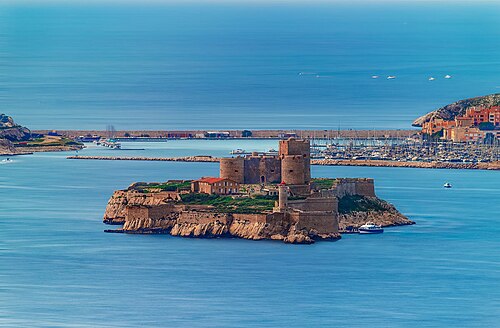
Half a day
20-minute boat from the Vieux Port; the Monte Cristo cells and ramparts; combine with the Frioul islands
 3
2 hours
Monumental fountain and colonnade; fine arts museum in the left wing, natural history in the right; park behind
Half a day
Footbridge from the fort to the lace-concrete museum; the rooftop and fort gardens are free
 5
2 hours
Morning fish market on the Quai des Belges; Norman Foster's mirrored canopy; bars along the south quay at night
 6
2 hours
Street art, artisan workshops and the Vieille Charité courtyard on the hill north of the port
 7
A full day
Limestone inlets from Les Goudes to Cassis; bus 21 to Luminy then trails to Sugiton or Morgiou; summer access can close in fire risk
 8
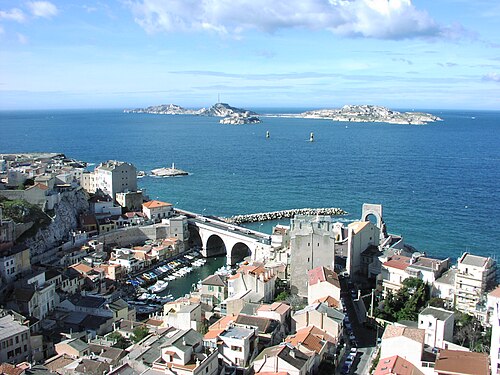
2 hours
Tiny fishing cove under the Corniche viaduct; pizza at Chez Jeannot or bouillabaisse at Chez Fonfon
Half a day
Frioul shuttle from the Vieux Port; swim in the coves of Ratonneau and return for the evening light on the harbour
Marked GR trail; steep and shadeless, carry 2 litres of water; the Mes Calanques app rates each route
From our research of travel guides; ticket prices from Tiqets when we found them. Photos: Wikimedia Commons, free licences.
How to see it
Grouped so you never cross the town twice. Your own trip moves these around your dates, opening days and budget.
Where to sleep
Where you sleep in Marseille decides how much you walk and how you spend your evenings. Your trip prices the stays for your dates.
Hotels around the Old Port, the safest and most central area. Walk to most sights; busy and touristy.
The oldest quarter, with steep lanes and small guesthouses above the port. Charming and close to the port; steep streets.
Near the main station, with simple hotels and quick trains. Handy for arrivals; the streets around are less pleasant.
Quiet residential area near the city beaches south of the centre. Good for swimming; a bus ride to the port.
What to eat

Rich fish soup served in two parts: broth with rouille on toast, then the fish.

Strong garlic mayonnaise served with vegetables and salt cod.
Hard, boat-shaped biscuits flavoured with orange blossom, a Marseille speciality.
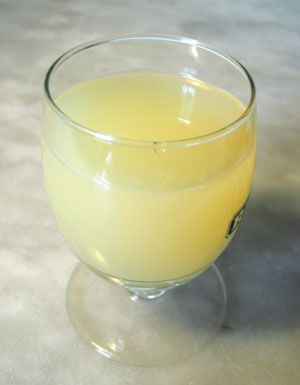
Aniseed spirit mixed with cold water until cloudy. The city's aperitif.
Dish photos: Wikimedia Commons, free licences.
When to go
Best months30° and overAverage daytime high
Pleasant days and the least rain.
13 mm of rain on average.
Up to 33° in the afternoon. November is the wettest month (94 mm).
Source: NASA POWER climatology.
Good to know
Official source: smartraveller.gov.au, checked 2026-10-01. Your plan checks your own passport when you build it.
In summer, Sugiton and Pierres Tombées need a free online booking, and some coves close on high fire-risk days.
The centre is safe, but muggings and pickpocketing have risen. Avoid most northern districts and carry few valuables.
A single ticket gives an hour of transfers on buses and trams. Day passes suit busy days.
Some drivers overcharge. Note the number inside the car, and report problems to the tourist office.
City museums, including the fine arts and history museums, close on Mondays. Plan the Calanques or a beach that day.
Do not wear Paris Saint-Germain or other visiting team shirts. On match nights, avoid the Boulevard Michelet area.
Questions
Food and getting around come to about A$58 a person a day eating street food, A$94 with a balanced mix and A$113 eating mostly in restaurants, before your stay and activities. These are estimates from price levels across France; Marseille itself is not checked yet.
The most pleasant months are March to May, September and October. July is the driest month (13 mm of rain) and November the wettest (94 mm); daytime highs run from 11 to 33 °C over the year.
No visa needed for a holiday. Checked on smartraveller.gov.au on 2026-10-01; rules change, so check again before you book.
Basilique Notre-Dame de la Garde, Château d'If, Palais Longchamp, Mucem and Fort Saint-Jean, Vieux Port.
Tell us your total. We build the whole trip to fit it, every cost counted.
Header photo: kallerna, CC BY-SA 4.0, Wikimedia Commons. Photo credits